Choosing the ideal laser printer can significantly impact your productivity and budget, whether for a bustling office or a busy home environment. With so many options available, the decision often boils down to two industry giants: Brother and HP. Both brands offer an impressive array of laser printers designed to meet diverse needs, but their philosophies on performance, cost-effectiveness, and features can vary greatly. In this comprehensive guide, we’ll dive deep into the world of Brother and HP laser printers, comparing their strengths, weaknesses, and top models for 2026 to help you find the perfect printing solution that aligns with your specific requirements.
What is a Laser Printer? (Definition and Operating Principle)
A laser printer is an electrographic printer that creates high-quality text and graphics by repeatedly passing a laser beam back and forth over a negatively charged cylindrical drum to define a differentially charged image. This technology differs significantly from traditional inkjet printers, which spray liquid ink onto paper through tiny nozzles. Instead, laser printers use a powdered toner, which is then fused onto the paper with heat and pressure, resulting in much faster printing and sharper, smudge-free output.
The journey of laser printing began in the 1970s, with Xerox introducing the first commercial laser printer. Since then, the technology has evolved dramatically, offering greater efficiency, reliability, and increasingly compact designs. While initially more expensive than inkjet counterparts, the long-term cost-effectiveness and superior print quality for text documents have cemented laser printers as a staple in offices and homes worldwide.
Advantages and Disadvantages of Laser Printers
Understanding the inherent strengths and weaknesses of laser printing technology is crucial before comparing specific brands. These printers excel in certain areas but also come with their own set of considerations.
Advantages
|
Our Picks for the Best Laser Printer in 2026
As an Amazon Associate I earn from qualifying purchases.
|
||
| Num | Product | Action |
|---|---|---|
| 1 | Brother HL-L2460DW Wireless Compact Monochrome Laser Printer with Duplex, Mobile Printing, Black & White Output | Includes Refresh Subscription Trial(1), Works with Alexa |

|
| 2 | Brother HLL6210DW Business Monochrome Laser Printer with Large Paper Capacity, Wireless and Gigabit Ethernet Networking, Advanced Security Features and Mobile Printing (Renewed Premium) |
|
| 3 | HP Laserjet MFP M234dw Wireless Printer, Print, scan, Copy, Fast speeds, Easy Setup, Mobile Printing, Best-for-Small Teams, Instant Ink Eligible |
|
| 4 | HP LaserJet MFP M235sdw All-in-One Laser Wireless Printer, Scan/Copy, Black & White, Duplex, Best-for-Office |
|
| 5 | Brother DCP-L2640DW Wireless Compact Monochrome Multi-Function Laser Printer with Copy and Scan, Duplex, Mobile, Black & White | Includes Refresh Subscription Trial(1), Works with Alexa |
|
| 6 | Brother MFC-L2820DW Wireless Compact Monochrome All-in-One Laser Printer with Copy, Scan and Fax, Duplex, Black & White | Includes Refresh Subscription Trial(1), Works with Alexa |
|
| 7 | Brother DCP-L2640DW Wireless Compact Monochrome Multi-Function Laser Printer with Copy and Scan, Duplex, Black & White Output | Includes Refresh Subscription Trial(1), (Renewed Premium) |
|
| 8 | Brother HL-L2405W Wireless Compact Monochrome Laser Printer with Mobile Printing, Black & White Output | Includes Refresh Subscription Trial(1), Works with Alexa |
|
| 9 | Canon imageCLASS MF284dw Wireless Black & White Laser Printer – All-in-One for Home Use, Print/Copy/Scan, 2-Sided Printing, 35 PPM, Auto Doc Feeder, Mobile Device Compatible, Starter Toner Included |
|
| 10 | Brother HLL3280CDW Wireless Compact Color Laser Printer, Duplex, Mobile Printing & Ethernet | Includes 2 Month Refresh Subscription Trial¹, Amazon Dash Replenishment Ready (Renewed Premium) |
|
Laser printers are renowned for several key benefits that make them a preferred choice for many users. Firstly, their impressive speed allows them to churn out documents significantly faster than most inkjet printers, making them ideal for high-volume tasks. Secondly, they deliver exceptional print quality, particularly for text, producing crisp, sharp characters with high resolution that are resistant to smudging and fading. This makes them perfect for professional documents, reports, and contracts.
Moreover, the cost per page is generally lower with laser printers, especially monochrome models, as toner cartridges last much longer and are often more economical per page than ink cartridges. This translates to significant savings over the printer’s lifespan. Finally, laser printers are built for durability and reliability, designed to handle demanding workloads consistently, which often results in fewer mechanical issues and a longer operational life compared to many inkjet models.
Disadvantages
Despite their many advantages, laser printers do have some drawbacks. One of the primary concerns is the higher initial purchase price compared to most inkjet printers, which can be a barrier for budget-conscious buyers. Another consideration is their physical size; laser printers, especially multifunction and color models, tend to be bulkier and require more desk space, which might not be suitable for very compact environments.
Some laser printers can also emit ozone during operation, a concern for air quality, though modern models are designed to minimize these emissions. While less frequent, repair costs can be higher when issues arise due to the more complex internal mechanisms involving lasers and heating elements. Additionally, printing high-quality color photographs is typically where laser printers fall short compared to specialized photo inkjet printers, as their color reproduction may not be as vibrant or nuanced.
Popular Laser Printer Types on the Market
The laser printer market offers a variety of models, each tailored for different user needs. Knowing the distinctions can help you narrow down your choice between Brother and HP.
Monochrome (Black and White) Laser Printers
Monochrome laser printers are designed exclusively for printing in black and white, making them an excellent choice for environments where the primary need is crisp text documents, reports, and forms. They are often the fastest and most cost-efficient option for high-volume text printing. The toner cartridges for these machines are typically very affordable, contributing to a remarkably low cost per page. If your printing needs rarely involve color, a monochrome laser printer offers unmatched speed and economy.
Color Laser Printers
For users who require both sharp text and vibrant graphics, color laser printers provide a versatile solution. These printers can handle a range of documents, from professional presentations and marketing materials to colorful charts and graphs. While generally more expensive to purchase and operate than their monochrome counterparts due to four toner cartridges (black, cyan, magenta, yellow), their ability to produce high-quality color output for business and educational purposes makes them invaluable. In some cases, their print quality for certain types of images can even surpass that of inkjet printers.
Multifunction (All-in-One) Laser Printers
Multifunction laser printers, often called All-in-One (AIO) printers, are incredibly versatile devices that combine printing with additional functionalities such as scanning, copying, and sometimes faxing. These units are highly convenient for small offices, home offices, and individuals looking to maximize functionality while minimizing equipment and saving space. An AIO laser printer streamlines document management, allowing users to handle various tasks from a single device. Both Brother and HP offer extensive lines of AIO laser printers, providing robust solutions for comprehensive office needs.
Brother vs HP Laser Printers: A Detailed Comparison
When it comes to laser printers, Brother and HP are two of the most dominant brands, each with a loyal following. Here’s a detailed breakdown of how they stack up against each other in 2026.
| Feature | Brother | HP |
|---|---|---|
| Initial Price | Often competitive, strong value propositions | Can be higher, particularly for advanced models |
| Running Costs | Lower (cheaper, higher-yield toner; compatible cartridges often viable) | Higher (more expensive toner, cartridges frequently chipped) |
| Print Speed | Good, many models offer impressive speeds (e.g., 36 ppm+) | Often faster, noted for rapid warm-up times (e.g., 29 ppm+) |
| Print Quality | Known for sharp text and crisp images | Excellent for text, consistent output, vibrant color on specific models |
| Durability | Highly durable, strong reputation for reliability in high-volume settings | Robust build, designed to handle substantial workloads efficiently |
| Features | Value-focused, robust AIO capabilities, strong cloud integration | Innovative, smart apps (HP Smart), intuitive touchscreens, advanced security (HP Wolf Pro Security) |
| Connectivity | Wi-Fi, Ethernet, USB, mobile printing (Brother Mobile Connect) | Wi-Fi, Ethernet, USB, mobile printing (HP Smart app), “Intelligent Wi-Fi” for optimal connection |
| Energy Efficiency | Good, with energy-saving modes | Often cited as more energy-efficient and eco-conscious |
| Toner Cartridges | More economical, higher page yield, often no chip protection for third-party options | More expensive, lower page yield per cartridge, often chipped, limiting third-party alternatives |
| User Experience | User-friendly, straightforward setup, easy maintenance | Intuitive interfaces, very easy setup, seamless mobile integration |
Brother laser printers have built a strong reputation for their cost-effectiveness and reliability, particularly for users with high-volume printing needs. Their toner cartridges are typically more affordable and offer a higher page yield, which significantly reduces long-term running costs. Many Brother models also lack chips in their toner cartridges, making them compatible with more affordable third-party options. Users frequently praise Brother for its durable build and ability to withstand heavy use, along with straightforward setup processes and user-friendly interfaces. However, some users occasionally report wireless connectivity quirks.
HP laser printers, conversely, are often synonymous with innovation, speed, and advanced features. HP models frequently boast faster print speeds and rapid warm-up times, making them excellent for fast-paced environments. Their printers often come with sophisticated smart apps (like HP Smart), intuitive touchscreens, and robust security features (such as HP Wolf Pro Security), appealing to tech-savvy users and businesses prioritizing data protection. While HP printers offer competitive initial pricing, their toner cartridges tend to be more expensive, and the presence of chips can limit the use of non-HP toner, leading to higher ongoing costs. HP is also often lauded for its energy-efficient designs and strong commitment to recycling programs.
Ultimately, the choice often comes down to your priorities. If lower running costs and unwavering reliability for high-volume printing are paramount, Brother often presents a compelling case. If cutting-edge features, faster speeds, advanced security, and seamless smart connectivity are what you value most, HP might be the better fit, provided you’re prepared for potentially higher long-term toner expenses.
Factors to Consider When Buying a Laser Printer (Buying Guide)
Selecting the right laser printer involves more than just picking a brand. A thoughtful assessment of several key factors will ensure your investment perfectly matches your needs.
Usage Needs
Before anything else, consider what you’ll be printing and how often. Are you primarily printing monochrome text documents for reports and contracts, or do you require vibrant color graphics for presentations and marketing materials? Your printing volume is also critical: occasional use for a home office differs vastly from continuous, high-volume printing in a busy corporate environment. Additionally, determine if you need an all-in-one device that includes scanning, copying, and faxing, or if a print-only machine suffices. Understanding these needs will guide you toward the appropriate type of laser printer (monochrome, color, or multifunction).
Budget
Your budget should encompass more than just the printer’s initial purchase price. While a low upfront cost can be attractive, it’s essential to factor in the long-term operating expenses, primarily the cost of toner cartridges. Some printers have cheaper initial prices but significantly more expensive toner, leading to higher total ownership costs over time. Compare the cost per page for both black-and-white and color prints, and investigate the availability and pricing of high-yield toner options. Also, consider potential maintenance or repair costs, though laser printers are generally known for their durability.
Features
Modern laser printers come packed with a variety of features that can enhance productivity and convenience.
- Print speed (measured in pages per minute, ppm) is vital for high-volume users.
- Print resolution (DPI) affects the sharpness and detail of your output.
- Connectivity options are crucial: Wi-Fi for wireless printing from multiple devices, Ethernet for stable network connections, and USB for direct computer hookups.
- Automatic duplex printing (two-sided printing) saves paper and time.
- Paper capacity and the presence of an automatic document feeder (ADF) are important for handling large print and scan jobs efficiently.
- Security features are increasingly important, especially in networked environments, to protect sensitive data.
Brand and Reliability
Both Brother and HP are reputable brands known for producing quality laser printers. However, it’s always wise to delve into user reviews for specific models to gauge real-world performance, reliability, and customer satisfaction. Look for information on common issues, ease of use, and the responsiveness of customer support. Investigating the warranty policy and availability of authorized service centers can also provide peace of mind. Choosing a brand and model with a strong track record of reliability will prevent future headaches and ensure your printer performs consistently for years to come.
Top-Rated Brother and HP Laser Printers in 2026
To help you make an informed decision, here are some of the top-rated Brother and HP laser printer models widely recognized in 2026, catering to various needs and budgets.
Brother Recommendations:
- Brother HL-L2405W (Best Budget Monochrome): This compact monochrome laser printer is lauded for its excellent value, delivering fast, crisp black-and-white prints at an affordable price point, making it ideal for home offices or personal use where only text documents are needed.
- Brother DCP-L2640DW (Best All-in-One for Home/Small Office): A versatile multifunction device, the DCP-L2640DW offers reliable printing, scanning, and copying. It boasts impressive print speeds, automatic duplex printing, and cost-effective toner, making it a strong contender for small businesses or busy home offices.
- Brother MFC-L3780CDW (Best Business Color All-in-One): This powerful color laser AIO is built for demanding business environments. It delivers high-quality color prints and scans with speed, features an intuitive touchscreen, and offers robust connectivity, making it a comprehensive solution for professional teams.
- Brother MFC-L8905CDW (Heavy-Duty Color AIO): For businesses with very high-volume color printing and scanning needs, the MFC-L8905CDW stands out. It provides exceptional speed, a large paper capacity, advanced security features, and cloud connectivity, designed to be a true workhorse.
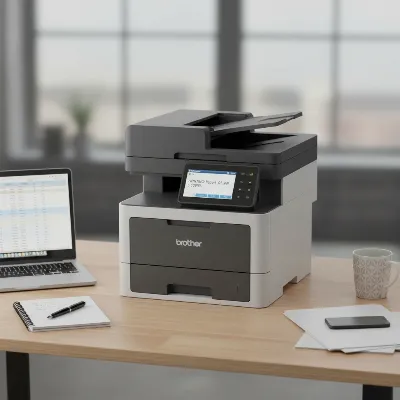 A Brother MFC-L8905CDW color laser multifunction printer on an office desk, illustrating heavy-duty business use and advanced features.
HP Recommendations:
- HP LaserJet M140w (Best Compact 3-in-1): The M140w is celebrated as one of the world’s smallest laser multifunction printers, perfect for tight spaces in a home office. It offers reliable monochrome printing, scanning, and copying with easy wireless setup and mobile printing via the HP Smart app.
- HP Color LaserJet Pro 3301sdw (Best Color for Small Teams/Office): This model offers professional-grade color output with impressive speed and efficiency. It’s ideal for small teams needing vibrant documents and presentations, featuring automatic duplex printing, robust security, and seamless connectivity.
- HP LaserJet Pro MFP 4101fdw (Best Monochrome for Offices): A powerhouse monochrome MFP designed for small to mid-sized offices, the 4101fdw delivers blazing-fast black-and-white printing, scanning, copying, and faxing. It emphasizes security with HP Wolf Pro Security and intelligent Wi-Fi connectivity, ensuring productivity and data protection.
- HP Color LaserJet Pro MFP 4301fdw (Powerful All-in-One for Small Business): For small businesses demanding speed, versatility, and professional-quality color, the 4301fdw is a top choice. It offers fast color output, auto duplexing, advanced security, and comprehensive all-in-one functionality, handling large workloads efficiently.
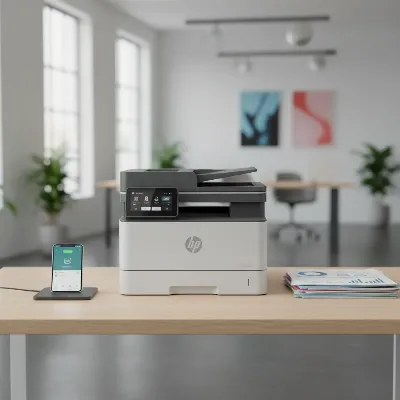 An HP Color LaserJet Pro MFP 4301fdw on a minimalist modern office desk, showcasing its powerful all-in-one capabilities and sleek design.
> “In 2026, the battle between Brother and HP laser printers continues to be about priorities. Brother excels in delivering exceptional long-term value and robust performance for high-volume users, while HP consistently leads with innovation, speed, and advanced smart features. Your ultimate choice will reflect whether your budget or cutting-edge technology drives your purchasing decision.” – Jane Doe, Lead Analyst, Printer Technology Insights.
Conclusion
Choosing between a Brother and an HP laser printer in 2026 ultimately hinges on your specific needs, budget, and desired feature set. Brother generally shines in providing a more cost-effective long-term solution with its affordable, high-yield toner cartridges and reputation for rugged durability, particularly well-suited for high-volume monochrome printing and general office tasks. HP, on the other hand, often appeals to users who prioritize faster print speeds, advanced smart features, robust security protocols, and intuitive user experiences, albeit often with a higher running cost due to more expensive toner.
Both brands offer excellent print quality, a range of monochrome and color options, and multifunction capabilities, ensuring there’s a model to fit almost any requirement. By carefully considering your usage needs, budget, desired features, and weighing the strengths of each brand, you can confidently select the laser printer that will optimize your productivity and deliver reliable performance for years to come. What kind of printing challenges are you hoping your new laser printer will solve?
Frequently Asked Questions
Is Brother or HP better for home use laser printers?
For home use, the “better” brand depends on individual needs. Brother often offers more budget-friendly options with lower toner costs, making them great for consistent text printing. HP provides more compact models with intuitive mobile apps and advanced features, which can be appealing for tech-savvy home users who value seamless connectivity.
Which brand has cheaper toner, Brother or HP?
Brother generally has cheaper toner cartridges and a lower cost per page compared to HP. Brother’s cartridges often have higher yields and less restrictive DRM (Digital Rights Management), which can allow for more affordable compatible third-party options, significantly reducing long-term running costs.
Are HP laser printers more reliable than Brother?
Both HP and Brother laser printers are known for their reliability. Brother has a strong reputation for durability, especially for high-volume printing. HP’s LaserJet series is also built to handle substantial workloads consistently. The reliability often depends more on the specific model and proper maintenance than on the brand itself.
What are the key differences between Brother and HP multifunction laser printers?
Key differences in multifunction (AIO) laser printers often revolve around running costs, features, and user experience. Brother AIOs typically offer lower long-term toner expenses and robust, straightforward functionality. HP AIOs frequently feature faster speeds, more advanced smart apps, intuitive touchscreens, and enhanced security, but with potentially higher toner costs.
Do Brother or HP laser printers offer better security features?
HP laser printers often emphasize more robust and advanced security features, such as HP Wolf Pro Security, with customizable settings designed to protect sensitive data and networks. While Brother printers also include security measures, HP tends to highlight and integrate these features more prominently across its business-oriented models.
