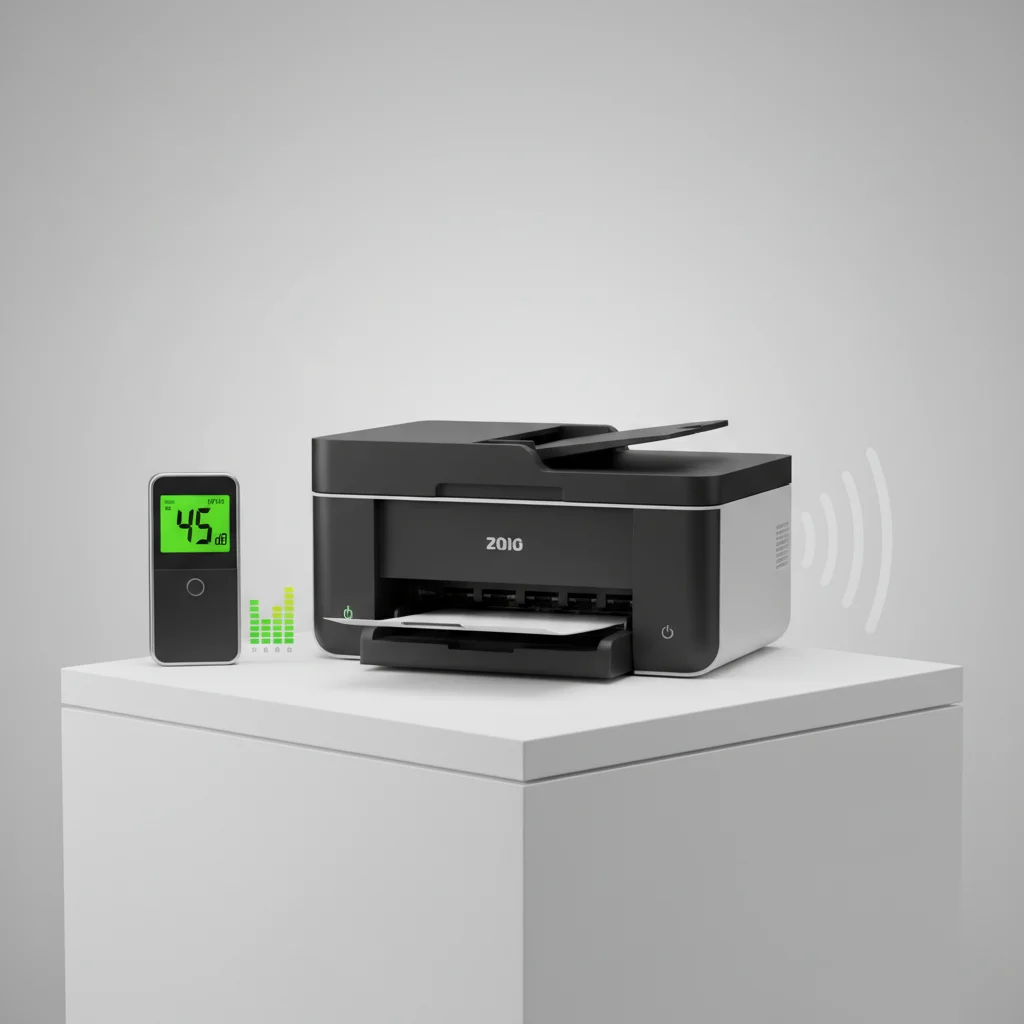
Understanding laser printer noise levels is crucial for maintaining a comfortable work environment. Generally, a laser printer operating at 50-60 decibels (dB) is considered acceptable for most office and home settings, while anything consistently above 65 dB can become disruptive. This range is comparable to a normal conversation or a quiet air conditioner, making it less intrusive during daily tasks. However, factors like printer model, operational mode (printing vs. standby), and even the type of paper being used can influence the actual noise output.
What Causes Laser Printer Noise?
Laser printers generate noise primarily from several mechanical components working in unison. The fuser assembly, which heats and presses toner onto paper, is a significant contributor, often producing a whirring or humming sound. The paper handling mechanism, including rollers and motors that feed and eject pages, also adds to the overall decibel level. Additionally, cooling fans, essential for preventing overheating, create a constant airflow noise. The rapid movement of the laser scanner and toner cartridge during the printing process can also produce subtle clicks and whirs. For explore our laser printer reviews on this site.
Measuring and Interpreting Decibel Levels
Decibel (dB) is a logarithmic unit used to measure sound intensity. A small increase in decibels represents a significant increase in perceived loudness. For instance, a 10 dB increase is generally perceived as a doubling of loudness. You can measure noise levels using a smartphone app or a dedicated sound level meter. When evaluating a printer’s specifications, look for both ‘operating noise’ and ‘standby noise’ ratings. Operating noise will always be higher due to the active printing process, while standby noise indicates the sound output when the printer is idle but powered on.
Tips for Reducing Laser Printer Noise
|
Our Picks for the Best Laser Printer in 2026
As an Amazon Associate I earn from qualifying purchases.
|
||
| Num | Product | Action |
|---|---|---|
| 1 | Brother DCP-L2640DW Wireless Compact Monochrome Multi-Function Laser Printer with Copy and Scan, Duplex, Black & White Output | Includes Refresh Subscription Trial(1), (Renewed Premium) |

|
| 2 | Brother HL-L2405W Wireless Compact Monochrome Laser Printer with Mobile Printing, Black & White Output | Includes Refresh Subscription Trial(1), Works with Alexa |
|
| 3 | HP Laserjet MFP M234dw Wireless Printer, Print, scan, Copy, Fast speeds, Easy Setup, Mobile Printing, Best-for-Small Teams, Instant Ink Eligible |
|
| 4 | HP LaserJet MFP M235sdw All-in-One Laser Wireless Printer, Scan/Copy, Black & White, Duplex, Best-for-Office |
|
| 5 | Brother MFC-L2820DW Wireless Compact Monochrome All-in-One Laser Printer with Copy, Scan and Fax, Duplex, Black & White | Includes Refresh Subscription Trial(1), Works with Alexa |
|
| 6 | Brother HLL6210DW Business Monochrome Laser Printer with Large Paper Capacity, Wireless and Gigabit Ethernet Networking, Advanced Security Features and Mobile Printing (Renewed Premium) |
|
| 7 | Brother HLL3280CDW Wireless Compact Color Laser Printer, Duplex, Mobile Printing & Ethernet | Includes 2 Month Refresh Subscription Trial¹, Amazon Dash Replenishment Ready (Renewed Premium) |
|
| 8 | Brother DCP-L2640DW Wireless Compact Monochrome Multi-Function Laser Printer with Copy and Scan, Duplex, Mobile, Black & White | Includes Refresh Subscription Trial(1), Works with Alexa |
|
| 9 | Brother HL-L2460DW Wireless Compact Monochrome Laser Printer with Duplex, Mobile Printing, Black & White Output | Includes Refresh Subscription Trial(1), Works with Alexa |
|
| 10 | Canon imageCLASS MF284dw Wireless Black & White Laser Printer – All-in-One for Home Use, Print/Copy/Scan, 2-Sided Printing, 35 PPM, Auto Doc Feeder, Mobile Device Compatible, Starter Toner Included |
|
Minimizing laser printer noise can significantly improve your workspace comfort. One effective strategy is to place the printer on a sound-absorbing mat or a sturdy surface, as vibrations can amplify noise. Ensuring the printer is well-maintained, with clean rollers and a properly seated toner cartridge, can also prevent unnecessary rattling or grinding sounds. If possible, position the printer in a less trafficked area or within an acoustic enclosure, though this might impact ventilation. Some printer models also offer ‘quiet mode’ settings, which can reduce noise at the expense of print speed.
- Place printer on a sound-absorbing mat.
- Ensure regular maintenance and cleaning.
- Utilize ‘quiet mode’ if available.
- Position printer away from main work areas.
- Consider an acoustic enclosure for extreme cases.
Choosing a Quieter Laser Printer Model
When purchasing a new laser printer, noise level should be a key consideration, especially for home offices or shared workspaces. Many manufacturers now provide decibel ratings in their product specifications. Look for models with operating noise levels below 55 dB for a noticeably quieter experience. Compact and personal laser printers often have lower noise outputs compared to large, high-volume office machines. Reading reviews and comparing specifications from different brands can help you identify the quietest options available on the market.
Impact of Printer Location on Perceived Noise
The physical location of your laser printer plays a significant role in how its noise is perceived. Placing a printer in a corner or against a wall can sometimes amplify sound due to reflections, while an open space might allow sound to dissipate more effectively. Hard surfaces like concrete floors or bare walls will reflect sound more than soft furnishings, carpets, or curtains. Consider the acoustics of your room when deciding where to set up your printer. For very sensitive environments, a dedicated printer cabinet with sound-dampening features might be a worthwhile investment.
Get our weekly buyer guide
Practical specs, not advice. Unsubscribe anytime.
